
Your Garage Door Needs Lubrication More Often Than You Think
How often to lubricate your garage door depends on how much you use it and where you live — but here’s the quick answer most homeowners need:
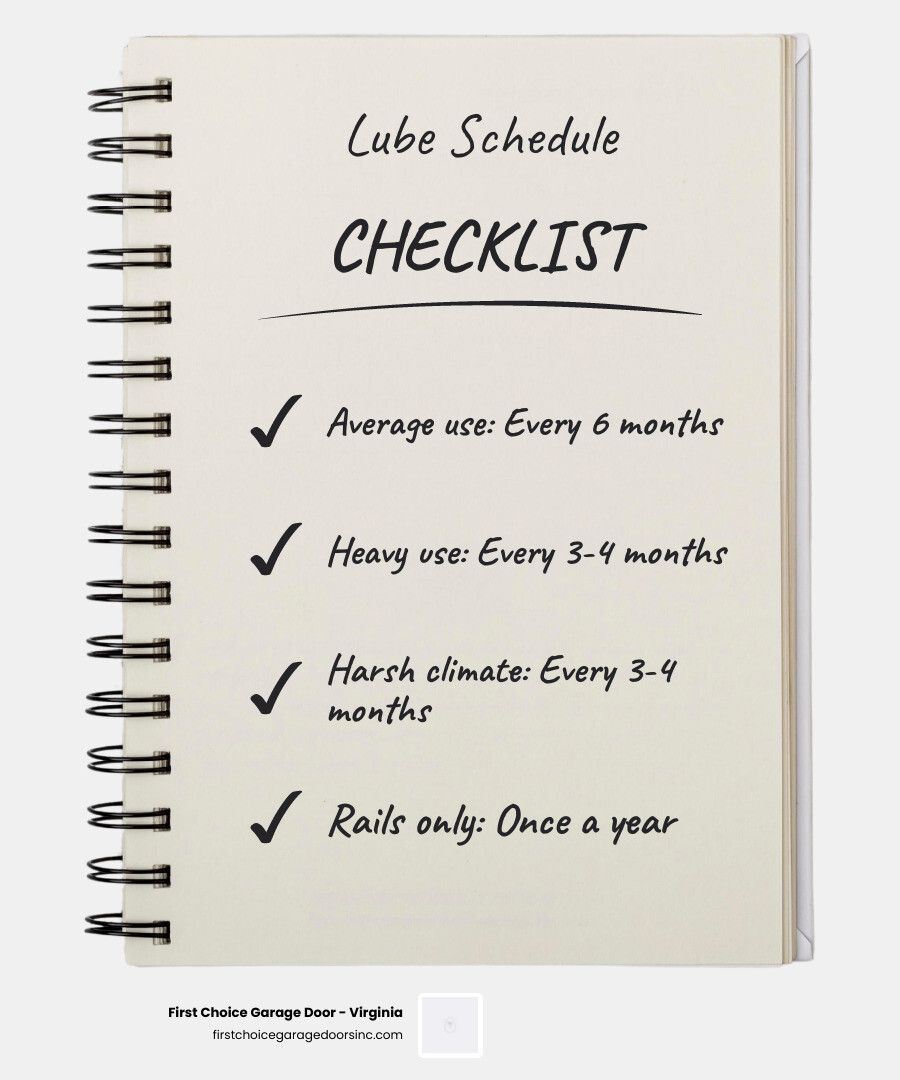
| Situation | Recommended Frequency |
|---|---|
| Average household use | Every 6 months (twice a year) |
| Heavy daily use | Every 3-4 months |
| Harsh climate (hot, cold, humid, or coastal) | Every 3-4 months |
| Rails only | Once a year |
Your garage door is one of the hardest-working parts of your home. It opens and closes thousands of times a year, with dozens of metal components grinding against each other under serious mechanical stress.
Without regular lubrication, that friction builds up fast. The result? Squeaks, grinding, jerky movement — and eventually, worn-out parts that fail before their time.
The good news: a quick lubrication session every few months is all it takes to keep things running smoothly and quietly.
Think of it like oil changes for your car. A little preventive care goes a long way toward avoiding expensive repairs down the road.
How Often to Lubricate Your Garage Door for Peak Performance

Maintaining a smooth, whisper-quiet garage door isn’t just about luxury; it’s about protecting one of the largest moving systems in your home. For most of us in Northern Virginia, the “sweet spot” for maintenance is every 3 to 6 months. If you’re a typical family using the garage door as your primary entrance—cycling it four or five times a day—aiming for a bi-annual schedule is your best bet.
We often recommend timing this with the change of seasons. Spring and fall are the perfect “reminder” periods. In the spring, you’re clearing out the winter salt and grime; in the fall, you’re prepping the metal components for the freezing temperatures ahead. Consistent Keeping Up With Garage Door Maintenance ensures that the metal parts don’t become brittle or seized during our unpredictable Virginia winters.
While the moving parts like hinges and rollers need attention every few months, the horizontal rails generally only require a check-up once a year. However, don’t let that fool you into thinking the system is “set and forget.” Regular inspections are the only way to catch small issues before they become “I-can’t-get-my-car-out-for-work” issues.
Factors Influencing How Often to Lubricate Your Garage Door
Not every home follows the same rules. Several environmental and usage factors can change how often to lubricate your garage door.
- Northern Virginia Humidity: Our summers are notoriously humid. Moisture in the air can lead to surface rust on springs and hinges, which increases friction. If your garage feels like a sauna in July, you might need to lubricate every three months.
- Coastal Salt Air: If you are closer to the coast or in areas where salt is heavily used on roads, that salt air can accelerate corrosion. Salt is a metal’s worst enemy, making frequent lubrication a necessity to create a protective barrier.
- High-Traffic Households: Does your garage door feel like a revolving door for kids, pets, and commuters? If it’s opening 10+ times a day, those parts are wearing down faster. Check out The Northern Virginia Guide to Opener and Spring Maintenance to see how high usage affects your specific opener type.
Signs That Dictate How Often to Lubricate Your Garage Door
Sometimes, your door will tell you exactly when it’s thirsty for some oil. You don’t always have to wait for the 6-month mark if you notice these red flags:
- Grinding or Screeching: If it sounds like a haunted house every time you hit the button, the metal-on-metal friction is reaching dangerous levels.
- Jerky Movement: A well-lubricated door should glide. If it hitches, jumps, or shakes during the opening cycle, the rollers or hinges are likely sticking.
- Visible Rust: Rust is a sign that the protective layer of lubricant has evaporated, leaving the metal vulnerable to the elements.
- Squeaking Hinges: This is often the first sign. A light squeak today is a snapped part tomorrow.
If you’re wondering Why Your Garage Door Is Noisy, lubrication is almost always the first place to look.
Essential Components That Require Regular Lubrication
To do the job right, you need to know exactly where to point that spray nozzle. You aren’t just spraying the whole door; you are targeting the “pivot points” where metal meets metal.
- Torsion Springs: These are the large coils located above the door. They do the heavy lifting. A light coating of lubricant helps the coils slide against each other without binding and prevents the “popping” sound of a dry spring.
- Hinge Pivot Points: Focus on the center point where the hinge bends. This is where the most friction occurs as the door rounds the curve of the track.
- Roller Bearings: If you have steel rollers, you need to lubricate the small ball bearings inside the wheel. If you have nylon rollers, do not lubricate the nylon wheel itself; only apply a drop to the bearings where the shaft meets the wheel.
- Lock Mechanism: If you have a manual lock, a quick spray ensures the key turns smoothly and the latch doesn’t stick.
For a deeper dive into specific parts, visit our Lubrication Tag Page. Keeping these parts “greasy” reduces the strain on your opener motor, effectively extending its lifespan.
Why You Should Never Lubricate Your Garage Door Tracks
This is the most common mistake we see in Manassas and throughout Northern Virginia. It seems logical: the rollers go in the tracks, so the tracks should be greased, right? Wrong.
Lubricating the tracks is actually counterproductive. Grease and oil in the tracks act like a magnet for dust, hair, and debris. Over time, this creates a thick, sticky “sludge” that actually makes it harder for the rollers to move. Even worse, if the tracks are too slippery, the rollers might slide instead of rolling, which can cause the door to become unbalanced or slip off the tracks entirely.
Instead of lubricating, you should clean the tracks. Use a damp rag and a mild household cleaner to wipe away gunk. If there is stubborn grease, a little degreaser will do the trick. For more on the “clean vs. lube” debate, read about Lubrication and Adjustments for a Happier Annapolis Garage.
Choosing the Best Lubricant for Your Northern Virginia Home
Your choice of “grease” matters just as much as how often to lubricate your garage door. You want a product that can withstand the temperature swings of Virginia—from freezing January nights to blistering August afternoons.
We generally recommend two types of products:
- Silicone-Based Sprays: These are fantastic for most moving parts. Silicone is “slippery,” fast-drying, and doesn’t attract as much dust as heavier greases. It’s also excellent at repelling moisture, which is vital for preventing rust.
- White Lithium Grease: This is a thicker option often used for metal-on-metal contact, like the screw drive on certain openers or heavy-duty hinges. It stays put and provides a long-lasting cushion against friction.
For more information on the specific brands we trust, check out our Garage Door Maintenance Products and Services page. Whatever you choose, ensure it is a “non-staining” formula to keep your garage floor clean!
Why Standard WD-40 is Not the Right Choice
We love the “Blue and Yellow Can” for many things, but your garage door isn’t one of them. Standard WD-40 is primarily a solvent, not a lubricant.
Its job is to clean away rust and loosen stuck bolts. While it might make the door quiet for a day or two, it evaporates almost immediately. Even worse, it can actually strip away any existing high-quality grease, leaving your parts drier than they were before. It also tends to attract dust, which leads to the “sludge” problem we mentioned earlier. Stick to specialized garage door lubricants or silicone sprays for long-term protection.
How to Lubricate Your Garage Door: A Step-by-Step Guide
Ready to get to work? Follow this no-nonsense guide to get the job done like a pro.
- Power Down: For safety, unplug your garage door opener or flip the breaker. You don’t want the door moving while your fingers are near the hinges.
- Clean the Tracks: Use a damp rag to wipe the inside of the tracks. Remove all dust and old grease. Remember: No lube here!
- Hinges and Rollers: Apply a small amount of silicone spray to each hinge pivot point. For the rollers, target the bearings inside the wheel. Wipe away any excess so it doesn’t drip on your car.
- Springs and Cables: Spray the torsion springs (the big ones at the top). You don’t need to soak them; a light, even coat is enough to keep the coils from binding. You can also apply a tiny amount to the bearing plates on either end of the spring bar.
- The Opener Rail: If you have a chain or screw drive, apply a light layer of white lithium grease to the top of the rail where the trolley travels. If you have a belt drive, do not lubricate the rubber belt.
- The Manual Test: Reconnect the power and run the door a few times. This helps distribute the lubricant into all the tiny crevices.
For a more detailed walkthrough, see our Comprehensive Garage Door Maintenance Guide Manassas VA.
Safety Precautions for DIY Maintenance
Garage doors are under extreme tension. Before you start, keep these safety tips in mind:
- Use a Sturdy Ladder: Never overreach. Move the ladder as you go to stay balanced.
- Protect Your Eyes: When spraying overhead, it’s easy for a drop of lubricant to fall into your eyes. Wear safety glasses.
- Hands Off the Springs: While a light spray of lubricant is fine, never attempt to tighten or adjust the torsion springs yourself. These are under enough pressure to cause serious injury.
- Gloves are Your Friend: Lubricants can be messy and irritating to the skin.
If you see frayed cables, a bent track, or a gap in your spring while you’re lubricating, stop immediately and call a professional. Some things are best left to the experts.
Frequently Asked Questions about Garage Door Lubrication
Should I lubricate my garage door tracks?
No. Lubricating the tracks attracts dirt and debris, which creates a sticky residue that can cause the rollers to slip or seize. Instead, simply wipe the tracks clean with a damp cloth and a mild degreaser if necessary.
What is the best lubricant for garage door springs?
A silicone-based spray or a specialized garage door lubricant is best. These products penetrate the coils to reduce friction and provide a moisture barrier to prevent rust without becoming “gunked up.”
Can I use motor oil on my garage door?
We strongly advise against it. Motor oil is too thin, it drips everywhere, and it is designed for the internal environment of an engine, not the open-air environment of a garage. It will attract massive amounts of dust and create a mess.
Conclusion
Regular maintenance is the secret to a long-lasting garage door. By understanding how often to lubricate your garage door and using the right products, you can save yourself from the headache of sudden breakdowns and noisy operation.
Whether you’re in Manassas or anywhere else in Northern Virginia, we are here to help. If your door is still making noise after a good “greasing,” or if you’d rather have a pro handle the dirty work, First Choice Garage Doors is just a call away. Our team provides comprehensive Garage Door Maintenance Services to ensure your home stays safe, quiet, and reliable for years to come. Give us a call today to schedule your annual tune-up!